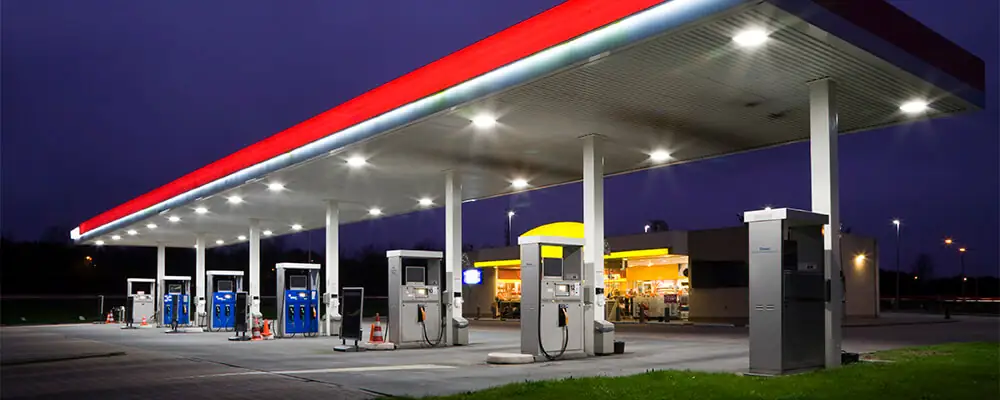
Two petrol stations on the same highway, a few kilometres apart. Identical tanks, the same dispensers, canopies of the same generation, similar convenience stores at the till. Yet one sells for twice the price of the other — and both prices are fair. The difference is not in the hardware. It is in a number you cannot see from the road: fuel throughput.
Throughput: the number that defines a station
Throughput is the volume of fuel a station actually sells per day or per month. For a valuer, it is the key indicator of a filling station: throughput is what turns a set of tanks and dispensers into an operating business. The buyer pays not for the equipment — that can be bought and installed anew — but for the flow of vehicles built up over years by location, traffic and driver habit.
That is why the value of an operating station is determined primarily under the income approach: how much the site earns on fuel and non-fuel sales, and how sustainable those earnings are. The market approach complements the picture, but comparing stations is only meaningful with an adjustment for throughput: two outwardly identical sites selling twice as much fuel apart are two different businesses.
Throughput is also verifiable. Accounting records, financial statements, purchase volumes from suppliers — a valuer does not take the figure on trust but reconciles it against documents, which is exactly why a valuation report becomes a weighty argument in price negotiations.
Brand, the side of the road and other non-obvious factors
In fuel retail, a brand is a footfall factor, not just signage. Drivers pull in where they trust the fuel quality and where their loyalty programme works; corporate fleets contract with networks rather than standalone sites. A recognisable brand adds throughput to a station — and, as a consequence, value.
Location decides just as much: highway or city, traffic intensity and structure, proximity to logistics hubs. There are less obvious details, too — even the side of the road matters, because a station on the "way home" side and one facing the oncoming flow collect different traffic.
The third layer is non-fuel retail: the shop and the coffee counter contribute a visible share of a modern station's earnings, and a buyer pays for that flow as well. Finally, land rights beneath the site: freehold or lease, term and conditions. A station on a leased plot with an expiring term is a very different asset from the same station on its own land.
What a 5–12% margin means
Margin on fuel throughput in Ukrainian fuel retail runs at roughly 5–12%. The margin is thin, which makes station value highly sensitive to change: a shift in purchase prices or excise duties, or a strong competitor opening nearby, can visibly move a site's economics. A station with high throughput and a margin cushion rides out such swings; a site operating at the break-even edge slips into the red on the same change.
A serious valuation therefore does not stop at current throughput. What matters is its sustainability: the multi-year dynamics, seasonality, the competitive environment, the outlook for the route and the region. Value is not a snapshot of one good month — it is a weighted forecast of cash flow.
A network is not the sum of its stations
Valuation of a petrol station network is a discipline of its own. A portfolio is almost never uniform: there are flagship sites with high throughput, stations running at break-even, and assets whose value lies in location rather than current performance. A bank lending against a network wants to see both the value of each site and the picture of the portfolio as a whole.
Our track record includes many years of annual revaluation of petrol station networks in Ukraine — including complexes with CNG modules — pledged as bank collateral. One telling detail: when a client moved from one lending bank to another, we continued the engagement there, preserving the valuation history and methodology, so the new bank had a clear view of the collateral from day one. That is how collateral valuation for lending works over the long run: not a one-off certificate, but an annual revaluation cycle that moves with the business.
Where to start
If a purchase, sale or pledge of a station lies ahead, start with an honest answer to one question: what is its throughput, and how sustainable is it? A filling station valuation combines that analysis with a mandatory site inspection — and turns the brand, the dispensers and the flow of vehicles into a single substantiated figure you can take to a buyer or to a bank.


Contact
Let's discuss your task
Oleksii Kiselyov · CEO of Kanzas LLC
Write to us by email or messenger — I'll explain how and how soon we can complete the valuation. The initial consultation is free.