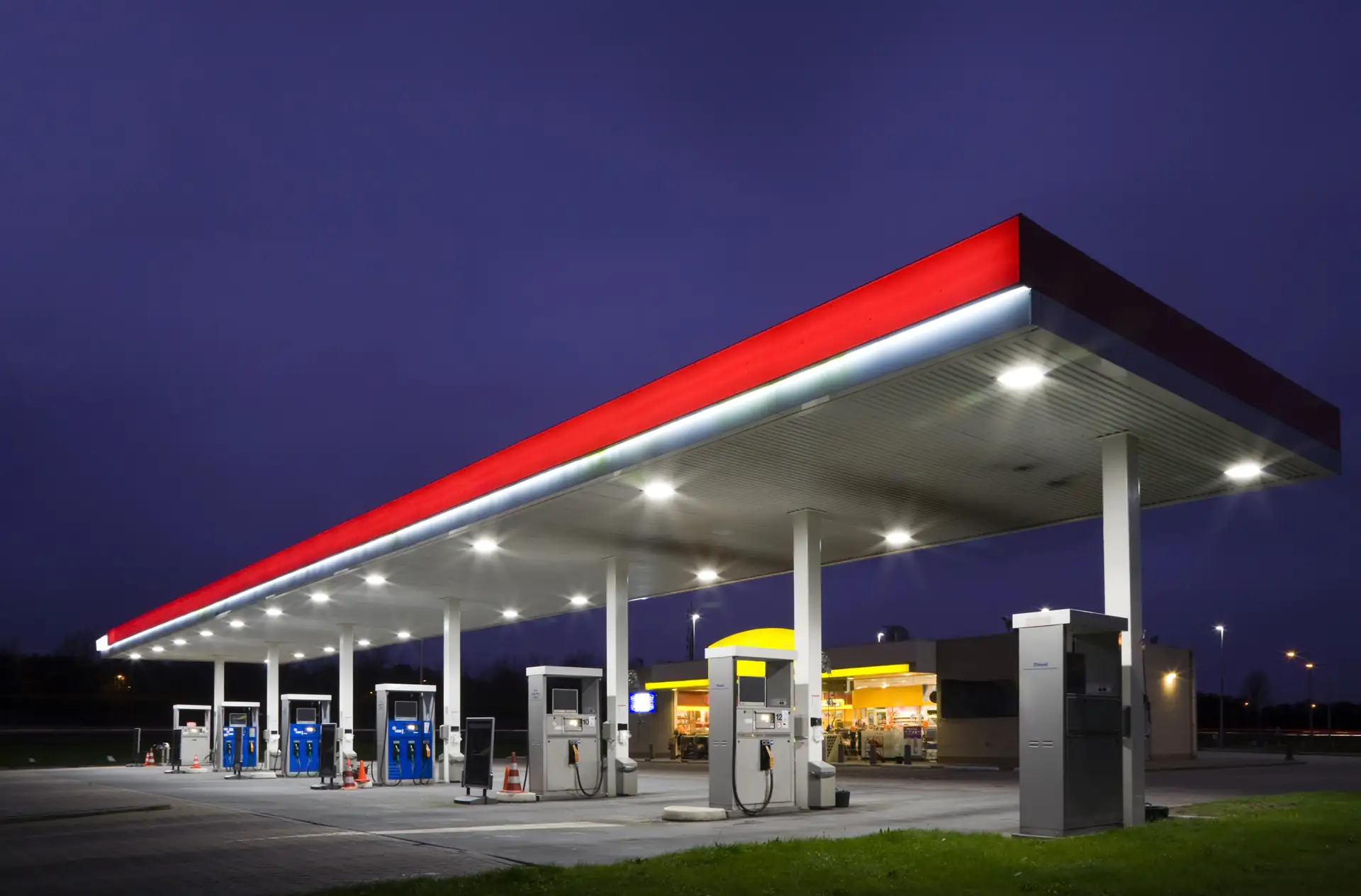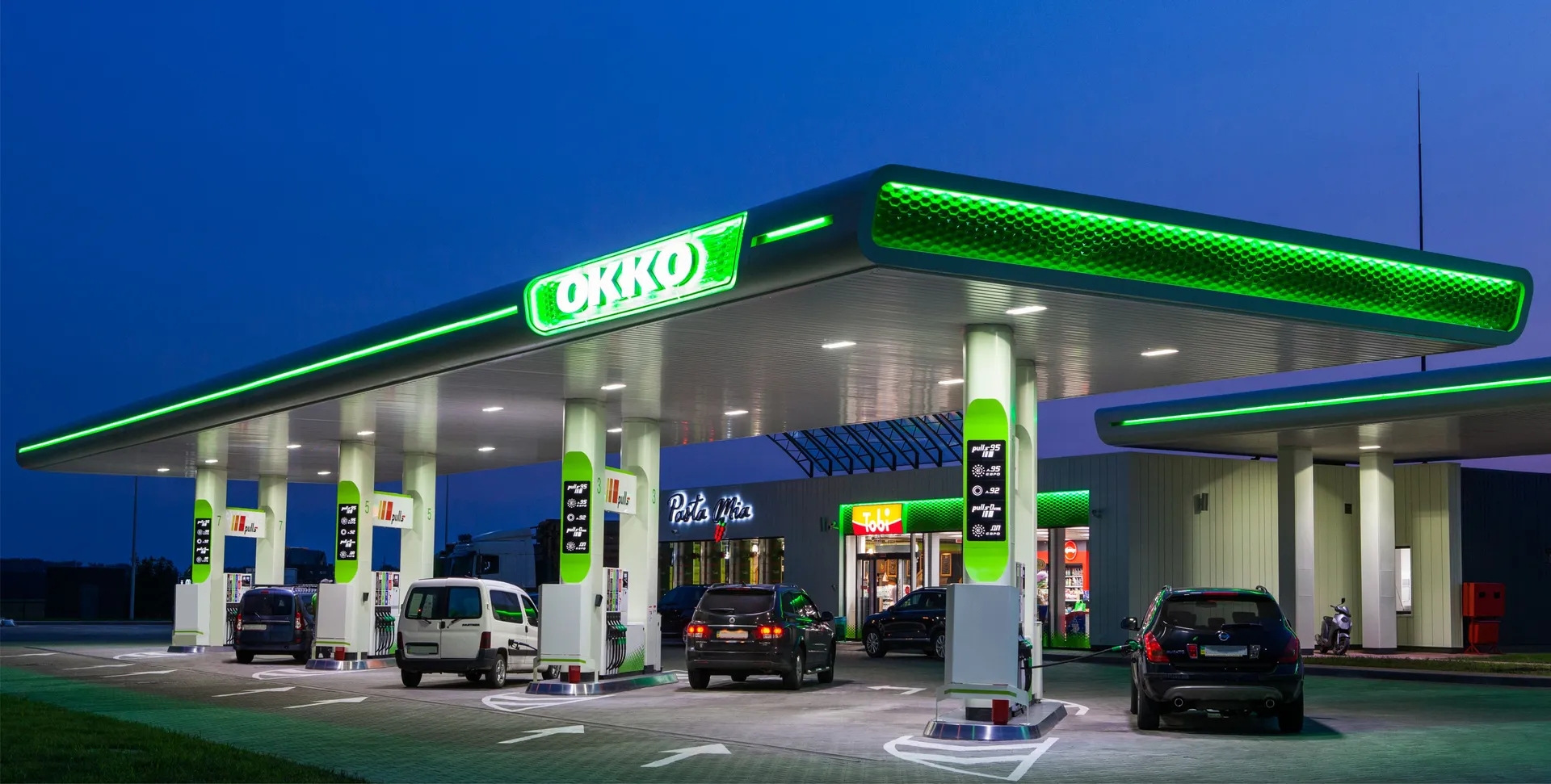
A chain of fuel stations and CNG (compressed natural gas) filling stations is first and foremost a business, not a portfolio of real estate. The value of an operating chain is driven less by tanks and canopies than by fuel throughput, brand recognition, locations and supply logistics. Valuing a chain is therefore methodologically different from valuing a single station: for a standalone site, see our gas station valuation service — this page covers the valuation of a chain as an integrated business.
A station chain as a business
A single station is valued as an asset — a complex of real estate, equipment and permits. A chain is an operating business with synergies no individual site possesses: a single brand and loyalty programmes, wholesale fuel procurement, shared logistics (sometimes including own fuel depots) and category management of convenience retail. A chain may combine formats — conventional fuel stations, CNG stations and LPG modules — and is valued as one business. Its value can differ materially from the arithmetic sum of its sites, and identifying that difference is precisely what a professional valuation does. The subject of valuation may be an integral property complex, the corporate rights of the chain's owner, or a business structured across several legal entities.
When a fuel station chain valuation is required
- bank financing secured by the chain, and annual collateral revaluations at the lender's request;
- acquisition or disposal of the chain, in whole or in part (M&A);
- revaluation of assets for financial reporting, including IFRS;
- attracting an investor or partner;
- shareholder disputes;
- assessment of war damage;
- network restructuring, closure or sale of individual locations.
Throughput and brand: the key value drivers
The central metric of a fuel retail business is throughput — the volume of fuel sold through each station. Margins across the Ukrainian fuel market are broadly similar and depend mainly on whether the chain is branded and on its locations, so throughput determines cash flow and, with it, value: the higher the throughput, the more the chain is worth. The same logic applies to CNG stations, where value is driven by gas sales volumes and the stability of a customer base dominated by commercial fleets.
Brand is the second key driver — it decides why a driver pulls into this station rather than the neighbour's: a new station under a recognised brand attracts traffic immediately. Yet brand alone does not guarantee success: competition in the Ukrainian fuel market is intense enough that some international chains chose to exit the market, unable to compete with local operators. The valuer also analyses station formats (shops and cafés), LPG sales and CNG stations within the chain, retail fuel licences for each site, land rights and location prospects.
Valuation approaches
The valuation is performed under Ukrainian national valuation standards, applying three approaches — but for an operating chain the income approach dominates: discounted cash flow based on actual and forecast fuel throughput and gas sales per station, reflecting the chain's margins and operating costs. The comparative (market) approach plays a supporting role, as whole-chain transactions are infrequent, though individual station sales are used to cross-check results. The asset-based approach values the chain through its assets and is used primarily for collateral purposes and idle sites.
How the engagement is carried out
A mandatory stage under Ukrainian valuation law is the inspection and identification of the subject assets — for a chain, this means visiting every station. Here our regional representatives across Ukraine are a practical advantage: sites in different regions are inspected quickly and without unnecessary cost to the client. The valuer then analyses throughput data and the fuel market, performs the calculations and issues a valuation report that is fully valid for banks, courts and state authorities in Ukraine. Key documents include the station register, per-station throughput and gas sales data for two to three years, financial statements, title and lease documents, retail fuel licences and supply contracts.
Our experience
The Kanzas company has been valuing fuel and gas retail businesses for more than 20 years. Our core work in this segment is the multi-year annual revaluation of fuel station chains for bank collateral purposes: we supported the client first in one bank and then, as the client moved to other lenders, in each of them. Our track record also includes the valuation of a combined fuel and CNG station chain as a single business, and numerous single-station valuations. The same methodology serves disposals and IFRS asset revaluations. Our team includes appraisers holding international valuation certificates.
Questions and answers
We need a single station valued, not a chain — where do we start? That is a separate service — gas station valuation as an asset: real estate, equipment and permits.
Do you value CNG stations separately? Yes. CNG stations and LPG modules are valued both within a chain and on a standalone basis — as assets or as operating businesses.
Some of the chain's stations have been damaged by military action — can you assess the losses? Yes. War damage assessment is a separate practice area of ours, including lost profit from idle stations.
How much does a chain valuation cost? The fee depends on the number of stations, the chain's geography and the purpose of the valuation. After a short initial consultation we will quote a firm price and delivery timeline.
We organise station inspections across Ukraine without pulling management away from the business, and treat every client's task with speed and attention. To discuss your project, email us or message us via your preferred messenger.