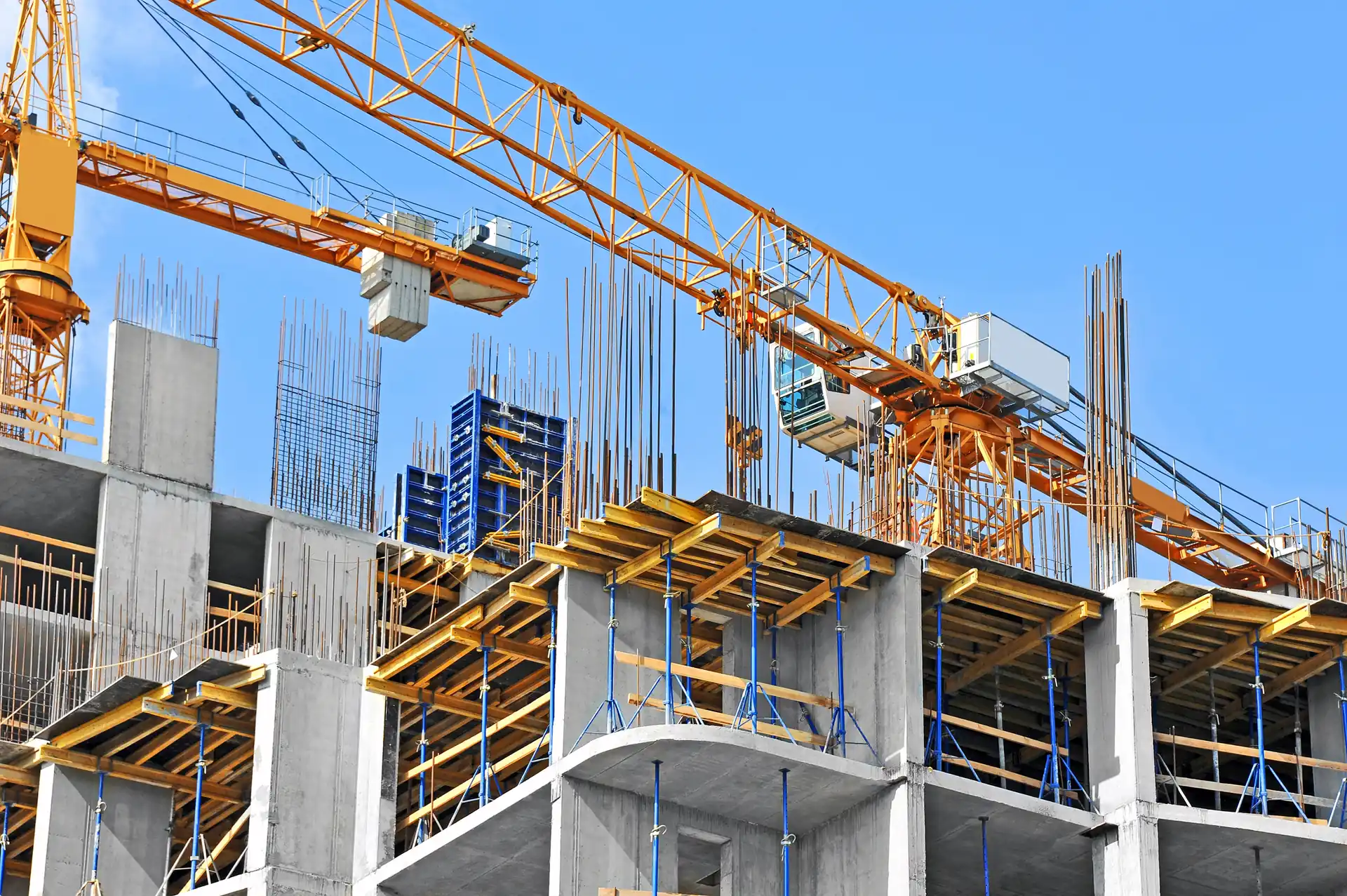
An unfinished building earns nothing yet — but it is already worth something. How much, neither the construction budget nor the costs incurred will tell you: the market value of construction in progress can be well above the money invested, or a fraction of it. We have valued unfinished construction in Ukraine for over 20 years — from residential towers to public and industrial buildings — and much of that practice comes from the most dynamic scenario: revaluations of assets while construction is still live.
What counts as construction in progress
Under the Law of Ukraine "On Mortgage" and National Valuation Standard No. 2, an object of unfinished construction is one for which a construction permit has been issued and costs incurred, but which has not been commissioned; mothballed projects fall into the same category. Once the special property right to the object is registered, an unfinished asset can be sold, gifted or mortgaged — and these are precisely the actions that require an independent valuation.
Two adjacent cases have their own pages: a private unfinished house owned by an individual, and the purchase of an apartment in a building under construction, where the valuation object is the rights to future real estate.
Why costs incurred are not value
Unfinished projects most often appear when the economic environment shifts abruptly: the investor abandons the original plan and seeks to recover at least part of the outlay — by selling the asset or raising finance against it. But the market does not pay for costs; it pays for potential. The appraiser therefore derives value not from the budget but from the answer to the key question: what can this asset become, and what will the result be worth. The same concrete frame can be a prized asset in a high-demand location and a liability where completion makes no economic sense.
Revaluation during construction: how collateral value grows
A distinct body of our work involves assets valued not after construction stopped, but while it was underway. The structure is classic for large-scale development: the bank opens a credit line secured by the land plot and the project, the developer's own contribution is agreed — and at each stage of completion a fresh revaluation is performed: collateral value rises, unlocking the next tranche. We have run such revaluation cycles many times for residential complexes, major shopping and entertainment centres in Kyiv and logistics parks — every large residential development in our practice was built exactly on this model, where the developer's own input was typically the land plot and the design, with virtually the entire construction cost financed by debt.
Residential development has its own twist: the loan does not always need to grow, because apartments are sold during construction — as property rights or through targeted bonds — and sales proceeds fund the works. The appraiser factors these financing structures into the calculation.
In developed European markets and the United States the same model — land as collateral, a modest equity share, the rest financed by debt — is used to build industrial facilities as well. In Ukraine the scheme has historically worked only for shopping centres, office centres, housing and logistics — their yields allowed a project to pay back even at local borrowing costs. Industrial construction financed this way remained unprofitable, because the cost of credit in Ukraine is several times higher than in developed markets. This distinction matters to any investor comparing development models across jurisdictions.
Post-war reconstruction will change this picture: Ukraine will need to rebuild destroyed facilities and replace obsolete ones to modern energy-efficient standards — effectively turning the country into one large construction site. For the valuation market this means one thing: construction-in-progress assets and mid-construction revaluations will multiply, and experience with them will only grow in value.
What the appraiser analyses
- the degree of completion — overall and by structural element;
- the condition of structures: whether the project was mothballed, and how it survived the standstill;
- utilities and permits — the initial permit documentation and technical conditions for connection to water, sewerage, gas and power networks: without them completion is impossible, and their availability materially affects value;
- rights to the land plot beneath the project;
- highest and best use: complete as designed, repurpose, or dismantle.
Valuation methodology: the residual method
Ukrainian National Standard No. 2 prescribes a combined calculation for unfinished construction that mirrors the residual valuation and development appraisal logic familiar to international investors: value is the difference between the projected market value of the completed and commissioned asset and the present value of the costs required to complete and commission it. The cost approach — costs incurred, adjusted for deterioration and damage — serves as a cross-check or applies where completion is not viable; the market approach is used where an active market for comparable unfinished assets exists.
When valuation of construction in progress is required
- collateral and credit line arrangements, revaluations during construction;
- sale or acquisition of an unfinished asset;
- litigation, including disputes with investors and contractors;
- bankruptcy, reorganisation or liquidation of the owner;
- recognition on the balance sheet, IFRS revaluation;
- contribution to charter capital.
Documents required
- construction permit and design documentation;
- registration of the special property right (where completed);
- certificates of completed works and cost records;
- technical inventory materials with the degree of completion;
- mothballing act (for suspended projects);
- land plot documents;
- technical conditions for utility connections.
Unfinished projects often lack part of the paperwork — at the preliminary consultation the appraiser will identify what is critical and what can be substituted.
Questions and answers
Can an unfinished asset be sold or mortgaged? Yes — once the special property right to the object of unfinished construction is registered, it becomes a full-fledged subject of transactions and mortgage. The deal and registration of encumbrances require an independent valuation report.
Construction stopped years ago — does that affect value? Substantially: structures deteriorate without mothballing, and permits may need renewal. That is why the site inspection and structural condition review are a mandatory part of our work.
Does the report work for international investors? Yes — we prepare IVS-based reports in English for foreign owners and investors evaluating Ukrainian development assets, including entry into stalled projects.
Unfinished construction is an asset where the cost of error is unusually high — for the bank opening a credit line and for the investor entering the project. Our team brings decades of hands-on experience with such assets: a site visit, analysis of completion and permits, and reasoning that stands up to bank and court scrutiny. Contact us by email or messenger to discuss your project and receive a quotation.