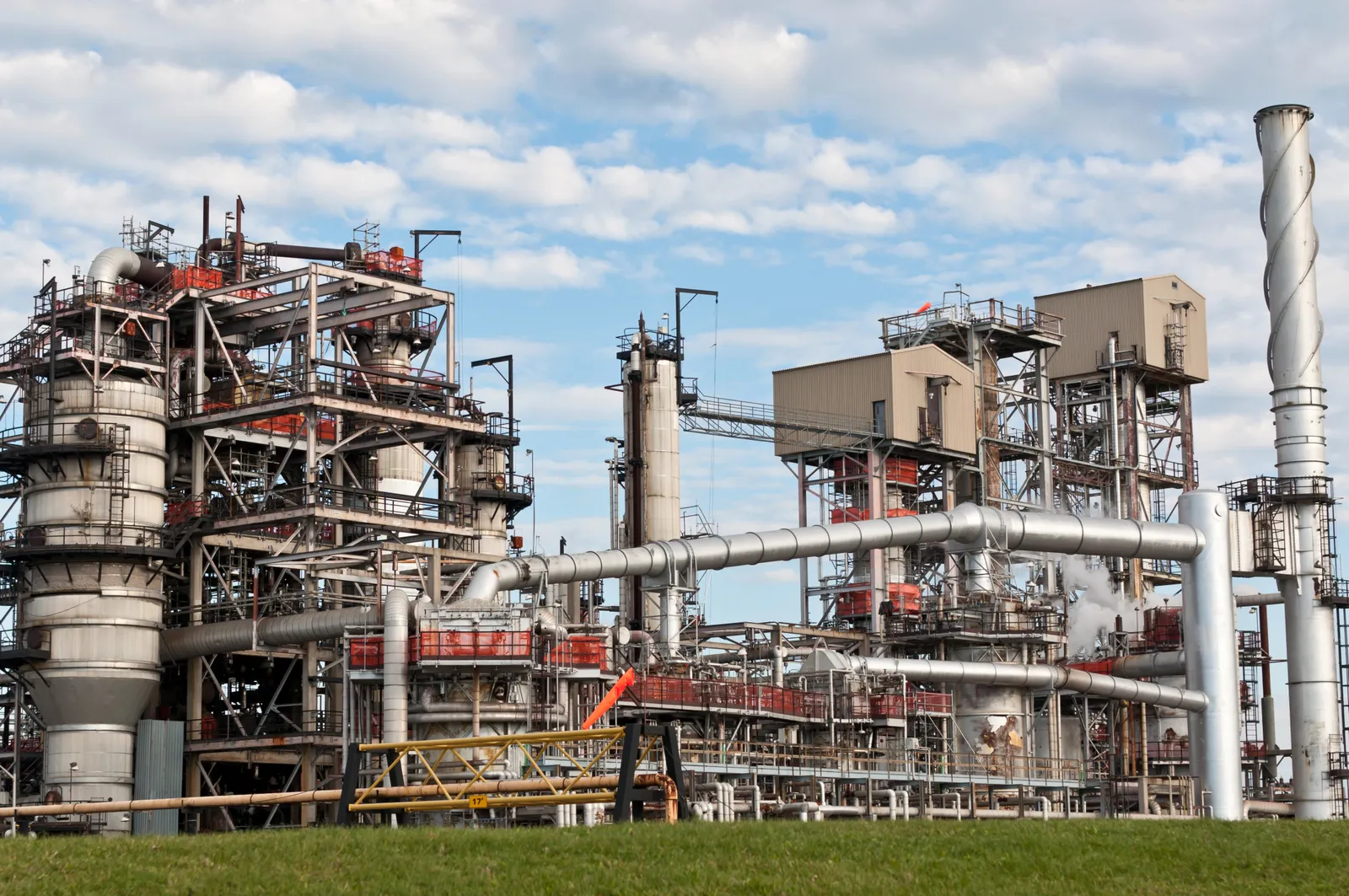
The first instinct after any destruction is to rebuild things as they were. For a home that is understandable; for a plant it is almost always a mistake. Restoring a 1970s factory to its 1970s process flowsheet means investing reconstruction money in a museum: the asset will be new in concrete and obsolete in economics on opening day. Hence the thesis we defend in every conversation about Ukraine's industrial recovery: rebuilding does not equal replication.
A legacy not worth copying
The historical scale of Ukrainian industry was enormous: Soviet Ukraine's industry was the second largest in the USSR, accounting for roughly 17% of the Union's entire industrial output. That scale created the production base the country has lived on ever since — and, as we showed in why Ukraine went 30 years without building new plants, critically little was added to it.
But the legacy has a second side: Soviet-era plants are obsolete both functionally and physically. Their process designs assumed cheap energy, different markets and different environmental and labour-safety standards. Copying them in the 2020s would lock in the lag for another generation. The destroyed part of the industrial base should be rebuilt around modern technology, and the replacement of surviving outdated capacity should follow modern standards — not old blueprints.
A resource base worth building for
What to build instead is suggested by geology. Ukraine's subsoil is often said to contain "half the periodic table"; the verified figures are, if anything, more impressive — though they count mineral commodities rather than chemical elements. According to the national geological survey, 117 of the 120 mineral commodity types used worldwide have been identified in Ukraine — more than 20,000 deposits and occurrences, amounting to roughly 5% of the world's mineral resource potential on an incomparably smaller share of the planet's territory.
Behind the totals stand specific industries. According to the US Geological Survey, even in wartime 2023 Ukraine remained the world's fourth-largest producer of rutile — a titanium feedstock, about 16% of global output — and a top-ten producer of iron ore and ilmenite; the Nikopol manganese deposits are among the largest on the planet.
For industrial recovery this means something concrete: the country has the resource base for processing close to the source — from metallurgy and construction materials to higher-value products. The only question is whether the new capacity is designed for twenty-first-century economics.
Energy efficiency as the new load-bearing structure
The central standard of that economics is energy efficiency. Soviet industry was built in a world where energy cost next to nothing; the Ukrainian industry of the future is being built in a world where energy is one of the largest lines in production cost — and where resilience of supply has been stress-tested by war. Energy-efficient technologies and materials are no longer a "green" add-on: they directly determine both the cost of output and the value of the asset itself. Two production halls of identical floor area with different energy consumption are two assets of different value.
A distinction codified in valuation methodology
Tellingly, the difference between "restore as it was" and "replace with modern" was codified in our profession long ago. Under the cost approach, International Valuation Standards distinguish two different methods: the reproduction cost method — the cost of an exact replica of the asset — and the replacement cost method — the cost of a modern asset of equivalent utility. For functionally obsolete facilities, valuers rely on replacement cost: a replica of an outdated workshop is simply not worth the money it would take to build. A country's reconstruction economics work the same way — it makes sense to pay for replacement, not replication.
The practical sequence runs as follows. First, the loss is documented: war damage valuation establishes what exactly was destroyed and what it was worth — the basis for compensation claims and litigation, in Ukrainian and international venues. Then the future is calculated: a feasibility study answers what to build instead and whether the new facility's economics hold together. Between those two calculations runs the line between rebuilding and replication: one looks back, the other forward.
For the sector-by-sector view of this logic — the standards and economics taking shape in agribusiness, energy, metals and logistics — see our industry overviews. And if your project in Ukraine has reached the calculation stage, you already know the two questions it starts with: what was lost, and what should be built instead. Both are our line of work.


Contact
Let's discuss your task
Oleksii Kiselyov · CEO of Kanzas LLC
Write to us by email or messenger — I'll explain how and how soon we can complete the valuation. The initial consultation is free.