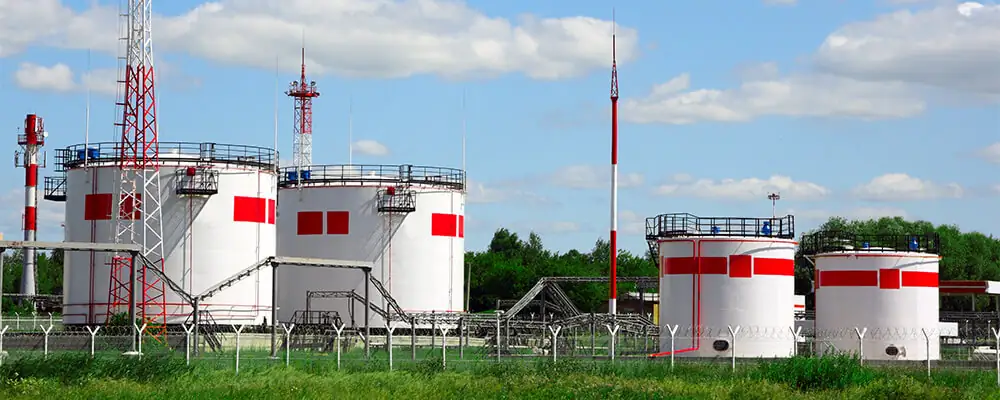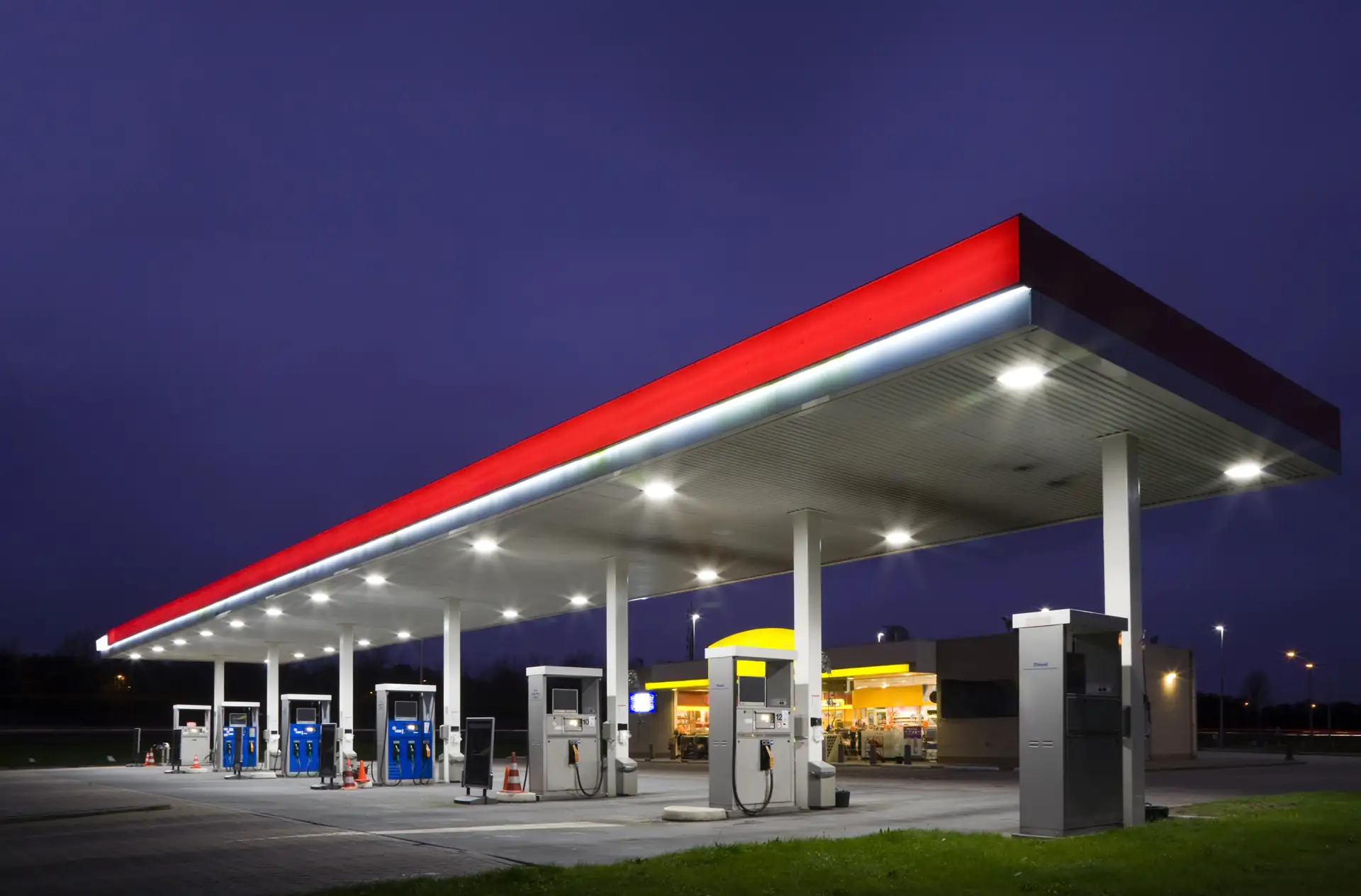
The Kanzas company provides independent valuation of petroleum products and fuel stocks held as inventory in Ukraine — from wholesale lots at tank farms to the fuel inventories of filling station networks. Fuel is a classic subject of working-capital finance in this market: banks lend against product stocks held in tank farm reservoirs and station tanks, and lenders, traders and auditors need an independent opinion of the market value of those volumes.
Fuel stock has one technical particularity that separates a defensible valuation from a rough one: the volume itself. Quantities in reservoirs are established from stock records with density and temperature corrections, and the valuer reconciles those figures when identifying the lot — before a single price is applied.
What petroleum products we value
- gasoline of various grades and diesel fuel;
- liquefied petroleum gas (LPG) and other motor fuels;
- jet fuel;
- fuel oil, heating oil and bitumen;
- lubricants, and product stock balances at tank farms and filling stations.
When international clients need this valuation
- Working-capital collateral — fuel stocks pledged to banks and trade finance providers financing traders, importers and filling station networks, including periodic revaluation;
- Transactions — purchase and sale of wholesale product lots;
- IFRS reporting — inventory measurement of fuel stocks for group accounts and audit;
- Corporate purposes — contribution to charter capital, insurance of lots, shortage disputes and enforcement proceedings in Ukraine.
What drives the value of a fuel lot
- product type and grade: gasoline, diesel, LPG, fuel oil;
- lot volume, corrected for density and temperature;
- quality parameters per the product quality passport;
- storage location and conditions: tank farm reservoirs or station tanks;
- current exchange and wholesale prices for the product.
Methodology
Petroleum products are valued as inventory primarily under the sales comparison approach of the Ukrainian national standards, consistent with the International Valuation Standards (IVS): market, exchange and wholesale prices for the relevant product — per tonne or per liter — adjusted for volume and delivery terms. The cost approach plays a supporting role in specific cases.
Identifying the lot: inspection and documents
A physical inspection is mandatory under Ukrainian valuation law: the valuer identifies the lot at the place of storage, reconciling reservoir and tank volumes against the stock records. The visit is arranged with the facility operator — the client's presence in Ukraine is not required.
Typical document set:
- data on product type, volume and place of storage;
- product quality passports, where available;
- transport and warehouse documents;
- documents confirming title to the lot;
- book value data for the inventory.
Send the lot parameters and the purpose of the valuation to [email protected] — we will quote a fixed fee and timeline. More than 20 years of practice with goods in turnover and fuel sector assets stand behind reports that hold up before banks and auditors.
Questions and answers
How much does a petroleum products valuation in Ukraine cost? The fee and timeline are quoted once you send the lot data — product type, volume, place of storage — and the purpose of the valuation. Scope and a fixed price are agreed before signing.
Do you test fuel quality? No. Quality parameters — octane number, sulfur content, conformity to standards — are established by certified laboratories and evidenced by the product quality passport. We determine the market value of the lot on the basis of the product type and volume data provided.
How is the volume of fuel in reservoirs established? From the stock records for reservoirs and tanks, with corrections for the density and temperature of the product. The valuer reconciles those figures when identifying the lot, and the value is then calculated from the verified volume.
Related services: Valuation for secured lending · Fixed asset revaluation · War damage assessment