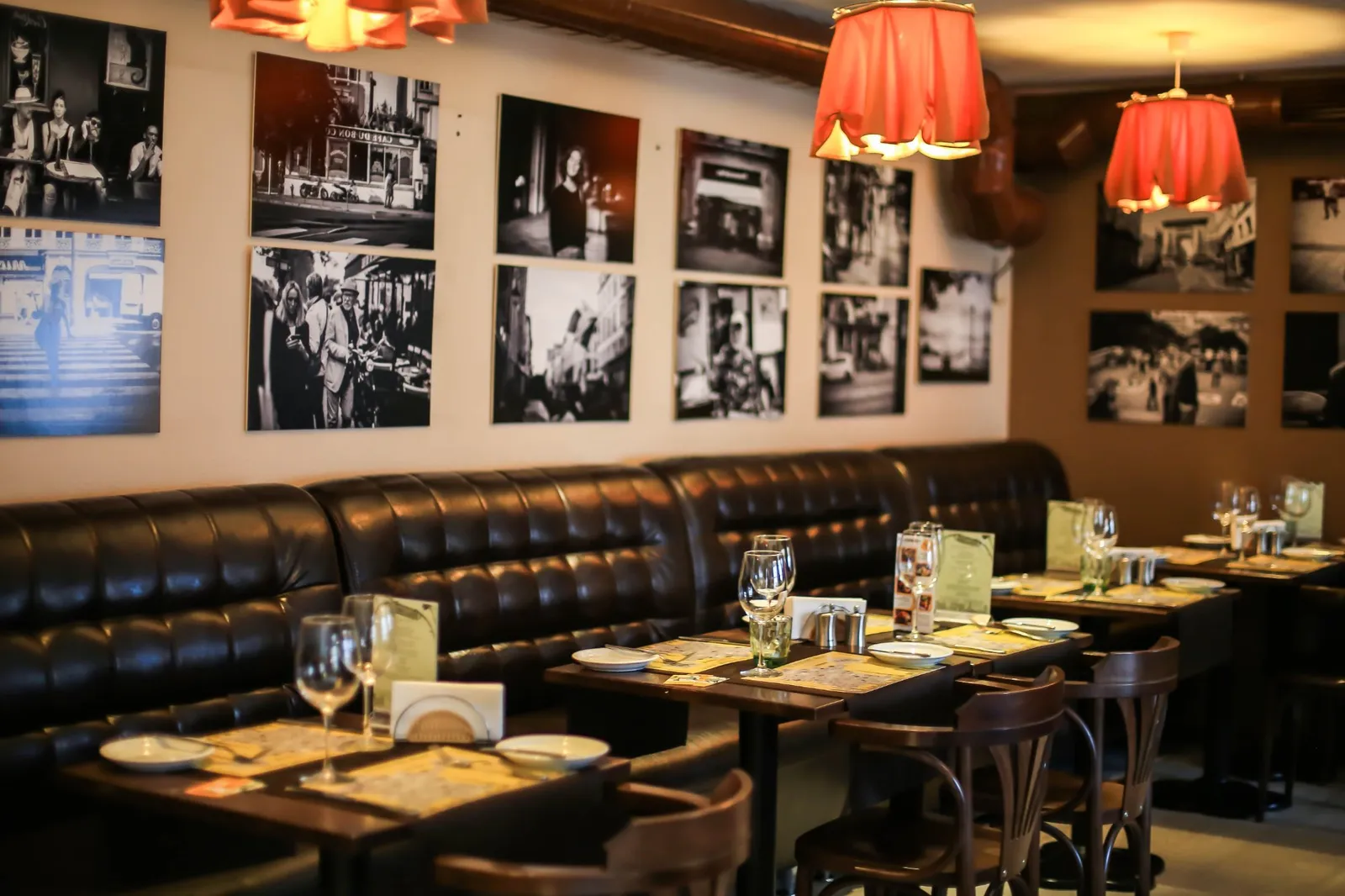
Two partners open a restaurant. Seven years later, one decides to leave — and that is when things get interesting. The partner who stays counts it this way: premises, kitchen, furniture — split in half. The partner who leaves sees something else: an established name, a full dining room on Friday nights, a team assembled over years — and his "half" is three times larger. Both are sincere in their arithmetic. And both are wrong, because neither has asked the key question: what exactly are we dividing — a business or real estate?
In Ukrainian valuation practice this is the classic restaurant dilemma. And it has a strict regulatory frame.
Two values of one venue
Ukraine's valuation legislation separates these situations at the level of national standards. If the object is the walls — premises with fit-out and utilities — National Standard No. 2 on real property valuation applies: what you have is commercial real estate, and its value is driven by location, condition and rental potential. If the operation is sold as a whole — with equipment, trade mark, supplier contracts and guest flow — it is an integral property complex or corporate rights, governed by National Standard No. 3 with its own set of valuation approaches: income, market and asset-based.
The difference is not academic; it is monetary. A venue on a secondary street can generate cash flow that makes the business worth several times the walls. The reverse also happens: expensive premises in the very centre house a restaurant that barely breaks even — then the "bricks" are worth more than the "business", and a buyer is better off acquiring the property without the signboard.
Why the bank sees only walls
When a restaurant in Ukraine is pledged as loan collateral, the bank looks at it without a trace of romance. In our lending practice the rule never changes: the pledge is the real estate, not the business. The logic is harsh but honest. A restaurant is inseparable from the people who make it: the chef, the manager, the concept itself. If the borrower stops paying, the bank cannot foreclose on the atmosphere and the regulars — it will be left with walls and equipment. And the next operator who takes the premises will almost certainly rebuild everything to their own concept, from the menu to the interior.
That is why, for lending purposes, a venue is valued as commercial real estate under National Standard No. 2 — using the market and income approaches, anchored to local rental rates. The best kitchen in town, regrettably, does not move that number. Venues in leased premises are a separate story: there is often nothing to offer the lender except equipment, which is why restaurateurs so rarely obtain credit "against the business".
When a restaurant is sold as a business
The sale of an operating venue is an entirely different matter. Our track record includes restaurant valuations precisely as going concerns: the buyer pays not for square metres (often leased anyway) but for an established operation that earns. Here the income approach takes the lead: how much the venue generates today and what happens to that flow tomorrow, when ownership changes. Everything that makes the venue a venue is on the table: the lease right, equipment, trade mark, proven processes.
What does the valuer examine first? Revenue stability over several years, not one good season. The lease term and conditions — a venue with a six-month lease is a very different asset from one with a ten-year contract. And dependence on key people: if the entire guest flow rests on the name of a chef who leaves with the seller, the buyer risks paying for a mirage.
The most frequent scenario in our practice, however, is not a sale to an outsider but a partner's exit: a share buyout, a split, sometimes a court dispute over value. In such cases an independent business valuation becomes the arbiter between "half by bricks" and "half by business": the report shows both the value of the real estate and the value of the operating venue, giving the parties a factual basis for negotiation instead of emotions.
What this means for the owner
Before commissioning a valuation — whether you are a Ukrainian owner or an international investor looking at hospitality assets in Ukraine — answer one question: what exactly are you selling, pledging or dividing? Walls are one engagement, an operating business is another, and the gap between the two can run to multiples. A correctly framed engagement saves time, money and nerves: the valuer works under the right standard from day one, the bank receives a report in its familiar format, and the partners get a number they can bring to the negotiating table rather than to court.





Contact
Let's discuss your task
Oleksii Kiselyov · CEO of Kanzas LLC
Write to us by email or messenger — I'll explain how and how soon we can complete the valuation. The initial consultation is free.