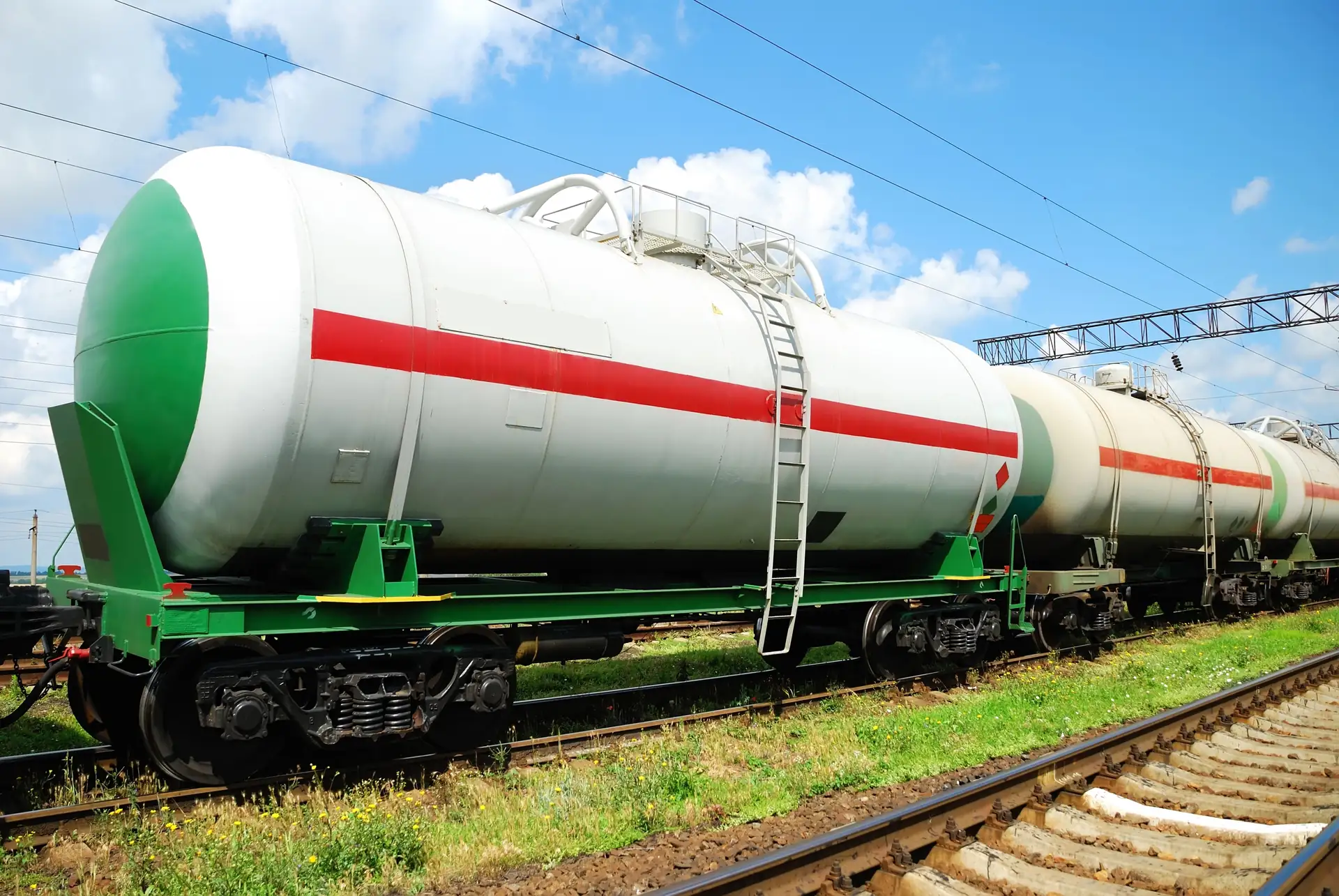
Railway rolling stock — freight cars, tank cars, flat cars and hoppers — is a capital-intensive asset class held by operators, lessors, industrial groups and agricultural traders working in Ukraine. The Kanzas company provides independent railcar appraisal and rolling stock valuation for leasing and financing transactions, collateral, purchase and sale of used fleets, and financial reporting, drawing on more than 20 years of asset valuation practice.
Why foreign lessors and lenders order a rolling stock valuation in Ukraine
Rolling stock is rarely a retail matter — it is almost always a business transaction. International clients typically need an appraisal when: railcars are placed under a lease or pledged as collateral in a financing arrangement; a used fleet changes hands between operators, including cross-border deals; the assets of a Ukrainian subsidiary are reported under International Financial Reporting Standards (IFRS); wagons are contributed to charter capital; or rolling stock has been damaged or lost during the war and the loss must be documented for insurance or compensation claims. The Kanzas company's long-standing practice of fixed asset revaluation for transport and industrial enterprises includes rolling stock valued within larger property complexes, and our team includes valuers holding RICS and TEGoVA (REV) certifications, so engagements can be aligned with International Valuation Standards (IVS).
Types of railcars and wagons we appraise
Open-top gondola cars (universal and specialised); covered wagons; flat cars, including container flats and timber platforms; tank cars for oil products, liquefied gases, food-grade and chemical cargoes; hopper cars for grain, cement and minerals; dump cars and other special-purpose rolling stock. Passenger coaches and metro cars are appraised as a separate category — supported by our adjacent practice in underground transport equipment.
What determines the value of a railcar
The decisive factors: car type and specialisation; year of build and remaining service life to the next scheduled overhaul or statutory retirement — for freight cars the normative service life is regulated, and a car approaching retirement is worth substantially less than an identical unit with years of service remaining; technical condition of bogies, body and couplers; date and type of the last repair (depot or capital); load capacity and volume; condition of special equipment such as tank shells or hopper discharge gear. The appraiser accounts for physical deterioration by mileage and age, functional obsolescence of the design, and economic obsolescence driven by demand for the particular car type on the freight market.
Methodology and identification of the fleet
The market (comparative) approach relies on transaction prices for similar cars on the secondary market and wagon exchanges — the primary approach for mass car types. The cost approach, through replacement cost less depreciation, applies to specialised cars with a limited market. The income approach treats the railcar as an income-generating asset — discounting the cash flow from operating or lease rates, which is often the most relevant perspective for lessors. Ukrainian law requires identification of the assets by the valuer: car numbers are verified against stencils and technical documentation, and condition and repair dates are recorded. For large fleets, inspection is performed on a sampling basis under an agreed methodology, with full document verification across the entire list — arranged by our staff and regional representatives without the client's travel.
Questions and answers
Does every railcar in a fleet have to be inspected? Identification by the valuer is mandatory, but for large fleets the physical inspection is conducted selectively under an agreed sampling methodology, while numbers and repair records are verified for every unit on the list.
How does remaining service life affect the value? It is one of the key drivers: two outwardly identical cars can differ in value several-fold if one is close to its statutory retirement date. The appraiser takes into account the build date, any service life extensions and the repair history.
Can the report be used for a cross-border lease or sale? Yes. The report is prepared under Ukrainian national valuation standards, methodologically consistent with IVS, and is accepted by banks, leasing companies and auditors in financing and transaction contexts.
How much does a railcar appraisal cost? We quote the fee and timeline after receiving the fleet list with technical specifications and the purpose of the appraisal. Based on this, we assess the scope and agree a fixed price and schedule — before the contract is signed.
Send us your fleet list by email at [email protected] or via messenger — we will respond with a scoped proposal, and the agreed deadlines will be met.
Similar appraisal objects
Related services: Fixed asset revaluation · Inventory and goods in circulation · Valuation for lending and collateral